
Blue Lagoon Comino 2026: what to know before you go
How to reach the Blue Lagoon on Comino, the free entry pass, when to go to avoid the crowds, what to bring, and what a boat trip there involves.
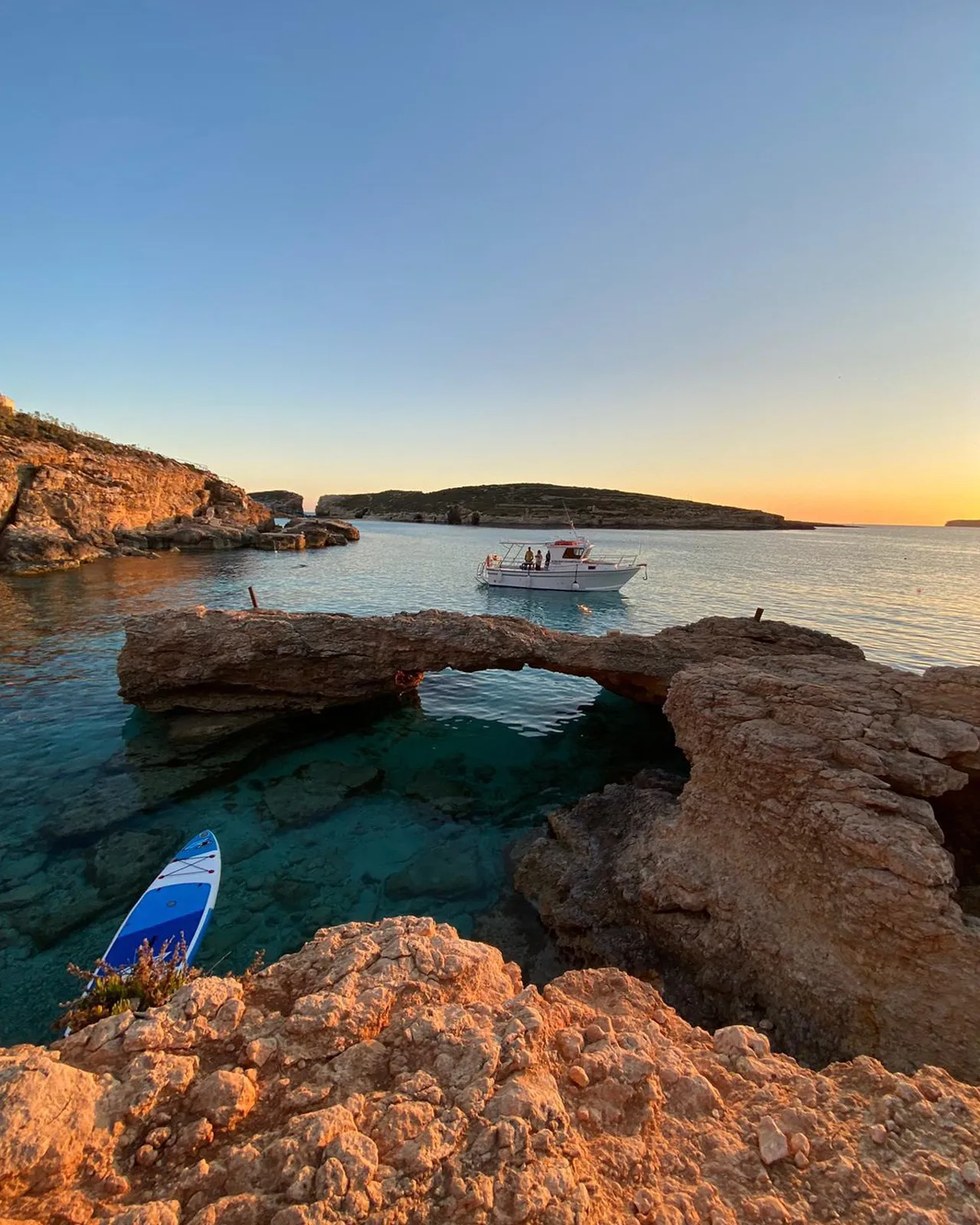
The Blue Lagoon sits in the narrow channel between Comino and the tiny island of Cominotto, off Malta’s north coast. It is the most photographed piece of water in the country, and for good reason. It is also busy, regulated, and easy to get wrong if you turn up without a plan. This guide covers what you need to know.
Where is the Blue Lagoon?
Comino is the small island between Malta and Gozo. It has almost no roads and only a handful of residents. The Blue Lagoon is on its western side, where a strait of shallow water separates it from Cominotto, an uninhabited islet a short swim away.
From Ċirkewwa, at the northern tip of Malta, you can see Comino clearly across the channel. That is why most trips to the lagoon start from this end of the island. The crossing is short and the water in between is usually calmer than the open coast further south.
Why is the water so blue?
There is nothing unusual in the water itself. The lagoon is shallow, often waist to chest deep, with a white sandy bottom. Sunlight goes straight down, reflects off the sand and comes back up through clear water. There are no rivers on Comino, so there is no run-off to cloud it.
The result depends on the light. On a bright, still morning it is a pale, almost glowing turquoise. On a cloudy day or with a bit of wind, it is still clear, but closer to an ordinary blue-green.
How to get to the Blue Lagoon
You can only arrive by sea. There are two broad ways to do it.
By the Comino ferry
Seasonal ferry boats run to the Blue Lagoon from the Ċirkewwa and Marfa area on Malta, and from Mġarr harbour on Gozo. They drop you at the jetty and pick you up later. This is the simplest way to spend a long day on the beach. Timetables, last return times and whether a ticket includes help with the entry pass vary by operator, so check before you buy.
By boat tour
A boat tour treats the Blue Lagoon as one stop among several. You swim there, then carry on to the caves, the Crystal Lagoon and the Gozo coast. You spend less time at the lagoon itself, but you see much more of Comino, and you can swim straight from the boat without joining the crowd on the rocks.
Tours leave from Ċirkewwa and Mellieħa in the north, and from Sliema and Buġibba further down the coast. The northern departures spend less time in transit. There is more on that in our guide to a Comino boat trip from Mellieħa, and an honest comparison of the options in small group vs private boat trips to Comino.
Ferry or tour: which suits you?
Take the ferry if you want to spend most of a day at the lagoon itself, with time to sit on the rocks, swim several times and eat ashore. Take a boat tour if you want to see more of Comino in a few hours, including places you cannot reach on foot.
Do you need a pass for the Blue Lagoon?
Since May 2025, anyone who wants to set foot on the shore at the Blue Lagoon needs a free, pre-booked access pass. The system is run by the Malta Tourism Authority with other government bodies. You choose a date and a time slot, and receive a QR code by email. Officials check it at the landing points and give you a wristband. Arriving on land without one can lead to a fine.
The published time slots are 08:00–13:00, 13:30–17:30 and 18:00–22:00. The number of people ashore at once is capped.
If you are on a boat and only want to swim, you do not need the pass. It controls access to the land, not the water. On our tour, plenty of guests never go ashore at all.
Rules like this can change from one season to the next. Check the current details on the Malta Tourism Authority’s announcement and the official booking page. Our Blue Lagoon pass guide goes through it step by step.
When is the best time to visit?
Time of day
The lagoon is quietest before about 10:00 and again from late afternoon. The middle of the day in summer is when the ferries and big boats are all there at once. Light matters too: the colour is at its best when the sun is high and the sea is flat, so late morning is a fair compromise.
Time of year
The swimming season runs roughly from May to October. The sea is warmest in August and September. July and August are the busiest months by a wide margin. June and September give you warm water and noticeably fewer people. In October the sea is still pleasant, but the weather is less predictable and some services wind down.
Weather and sea
Wind direction matters more than temperature. A strong wind can make the channel choppy and push boats to change their order of stops or skip a stop entirely. Any operator worth booking will tell you on the day.
How crowded does it get?
In high summer, very. The rocky shore fills up, the jetty is busy with ferries, and the shallow sandy patch can feel like a swimming pool. The pass system has reduced the peak numbers, but it is still not a quiet place at midday in August.
Two things help. The first is arriving at the edges of the day. The second is being on a boat. Anchored in the channel, you swim in open water with space around you, and you are away from the jetty.
What to do at the Blue Lagoon
Swim
This is the main event. The water is shallow over the sand and deepens towards the channel. It is calm most days because Cominotto shelters it.
Snorkel
The visibility is excellent, but the sandy middle has little marine life. For fish, head towards the rocky edges, or save your mask for the Crystal Lagoon.
Paddleboard
A paddleboard gives you a different view of the lagoon and lets you reach Cominotto easily. We carry one on board for guests to use.
Go ashore
With a pass, you can walk up onto the rocks, find a spot to sit and follow the path along the coast. There are kiosks selling drinks and simple food during the season. On our trip this is the stop where you can buy something to eat.
The Crystal Lagoon nearby
Just around the coast is the Crystal Lagoon, a small inlet surrounded by cliffs, with a cave running through the rock. It has no beach and no kiosks, so it can only be reached properly by boat. The water is deeper and very clear, and it is usually much quieter than the Blue Lagoon. It is the first swim stop on our Comino and Blue Lagoon boat tour.
What to bring
- Swimwear, worn under your clothes if you can
- A towel and a dry change of clothes
- Sun cream, a hat and sunglasses. There is very little natural shade ashore
- Water, if you are going by ferry and staying all day
- Cash and a card for kiosks
- A phone in a waterproof pouch, if you want pictures from the water
- Your access pass QR code, if you plan to go ashore
If your trip provides snorkelling gear, you will not need your own. Check what is included before you pack.
Staying safe
The Maltese sun is strong from late spring onwards, and the white rock and water reflect it. Reapply sun cream after swimming and keep drinking water.
Jellyfish, including the small purple mauve stinger, sometimes drift into the lagoon, especially after windy days. Look out for warning flags ashore and ask your skipper if you are unsure. Stings are painful rather than dangerous for most people, but seek help if you react badly.
The sandy area is shallow, but the channel beyond it is deeper and has boat traffic. Stay within the swimming area and away from moving boats. Swim noodles are a good idea for anyone less confident in the water.
How the Blue Lagoon fits into a boat trip
On our tour, the Blue Lagoon is the longest stop, about 45 minutes. We anchor in the channel, you swim or paddle from the boat, and anyone with a pass can go ashore for food and drinks. Before it, we stop at the Crystal Lagoon and pass Cominotto Reef. After it, we cross to the Gozo side for Ħondoq Bay and Ħalfa Rock, swim again at Santa Marija Bay, then go into the Santa Maria Caves if the sea allows, and pass Elephant Head Rock on the way home. The order can change with the weather.
The whole trip is three and a half hours from Ċirkewwa, with snorkels, swim noodles, a paddleboard and a welcome drink on board. See the tour and book a place.
Quick answers
Do I need a ticket for the Blue Lagoon?
You need a free, pre-booked access pass to set foot on the shore at the Blue Lagoon. If you stay on a boat and swim from it, you do not need one. Book through the official system linked from the Malta Tourism Authority.
How long does it take to get to the Blue Lagoon from Malta?
From Ċirkewwa at the northern tip of Malta, the crossing to Comino is short, usually well under half an hour depending on the boat and the sea. From Sliema or Buġibba it takes considerably longer.
What is the best time to visit the Blue Lagoon?
Early morning or late afternoon, and ideally in June, September or early October. July and August middays are the busiest times of the year.
Can you buy food at the Blue Lagoon?
Yes. There are kiosks ashore selling drinks, snacks and simple food during the season. You need the free access pass to go ashore to buy them.
Is the Blue Lagoon good for snorkelling?
The water is shallow and very clear, so it is good for beginners, though there is more sand than marine life. The rocky edges and the Crystal Lagoon nearby are better for seeing fish.